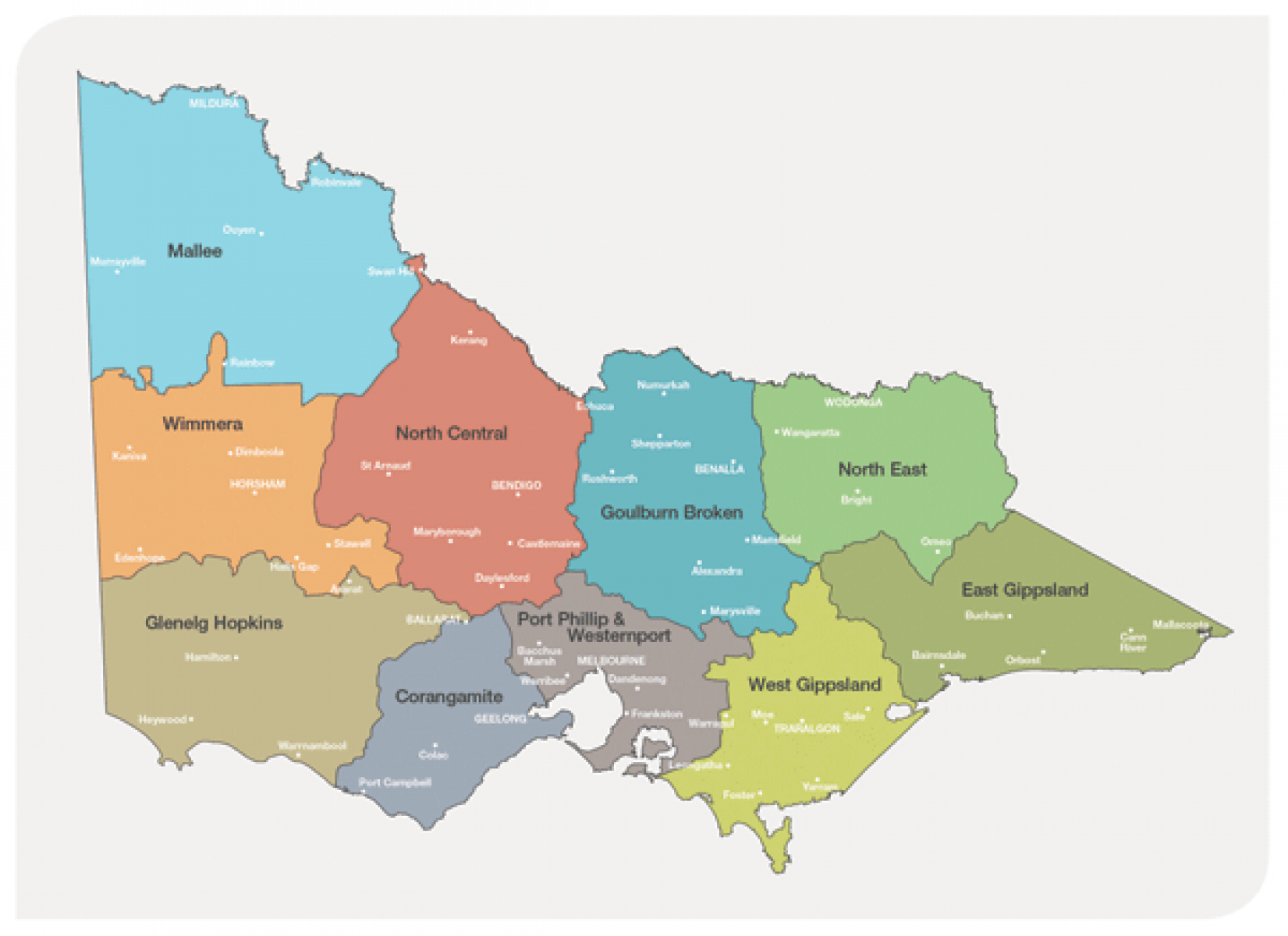
 Victoria is divided into 10 catchment and land protection regions (approved in 2013 and 2014): Corangamite, East Gippsland, Glenelg Hopkins, Goulburn Broken, Mallee, Melbourne Water, North Central, North East, West Gippsland and Wimmera" />
Integrated catchment management underpins Victoria's sustainable management of land and water resources and contributes to biodiversity management.
In Victoria, integrated catchment management (ICM) underpins the sustainable management of land and water resources and contributes to biodiversity management.
Through this approach, the Victorian Government and its partners seek to achieve sustainability and ensure the long-term viability of natural resource systems and human needs for both current and future generations.
Victoria’s framework for the integrated management of catchments is established under the Catchment and Land Protection Act 1994 (the CaLP Act).
ICM is the coordinated management of land, water and biodiversity resources based on catchment areas. It incorporates environmental, economic and social considerations.
Victoria is divided into 10 catchment and land protection regions:
Victoria is divided into 10 catchment and land protection regions (approved in 2013 and 2014): Corangamite, East Gippsland, Glenelg Hopkins, Goulburn Broken, Mallee, Melbourne Water, North Central, North East, West Gippsland and Wimmera" />
Catchment management authorities and Melbourne Water are responsible for integrated catchment management. They undertake integrated planning and coordinate the management of land, water and biodiversity.
They also involve the community in decision-making. For example, implementation committees for programs include people from the local community.
Each catchment management authority is structured to maximise community involvement in decision-making.
Regional catchment strategies set the direction and explain how a catchment's land, water and biodiversity will be managed. Catchment management authorities and Melbourne Water prepare them.
The local community and organisations involved in catchment management contribute to these strategies.
Each strategy identifies:
Page last updated: 28/09/23
